
Wednesday, July 31, 2019
The Last Blog Post
After over a decade of offering a view inside each summer's St. Albans School of Public Service program, the time has come for the SPS Blog to officially retire. Have no fear, this isn't closing the door on in-session coverage of each SPS class's adventures in public service -- the SPS Facebook page will still chronicle each session's happenings: Official SPS Facebook Page


Friday, July 19, 2019
SPS 2019: Official St. Albans School of Public Service Class Photo!
A lot of photos get taken during a School of Public Service session . . . like . . . thousands. But there's only one Official St. Albans School of Public Service Class Photo! This evening, just prior to the SPS Final Banquet, the SPS Class of '19 sat for their "photo of record." Congratulations, SPS 2019.
 |
| Official Class Photo: the St. Albans School of Public Service Class of 2019 |
SPS 2019: Final Banquet Speeches
One of the most-loved traditions at the School of Public Services is the tradition of speeches/toasts at the Final Banquet on the last full day of SPS, through which departing students share what the program (and their SPS classmates) has meant to them.


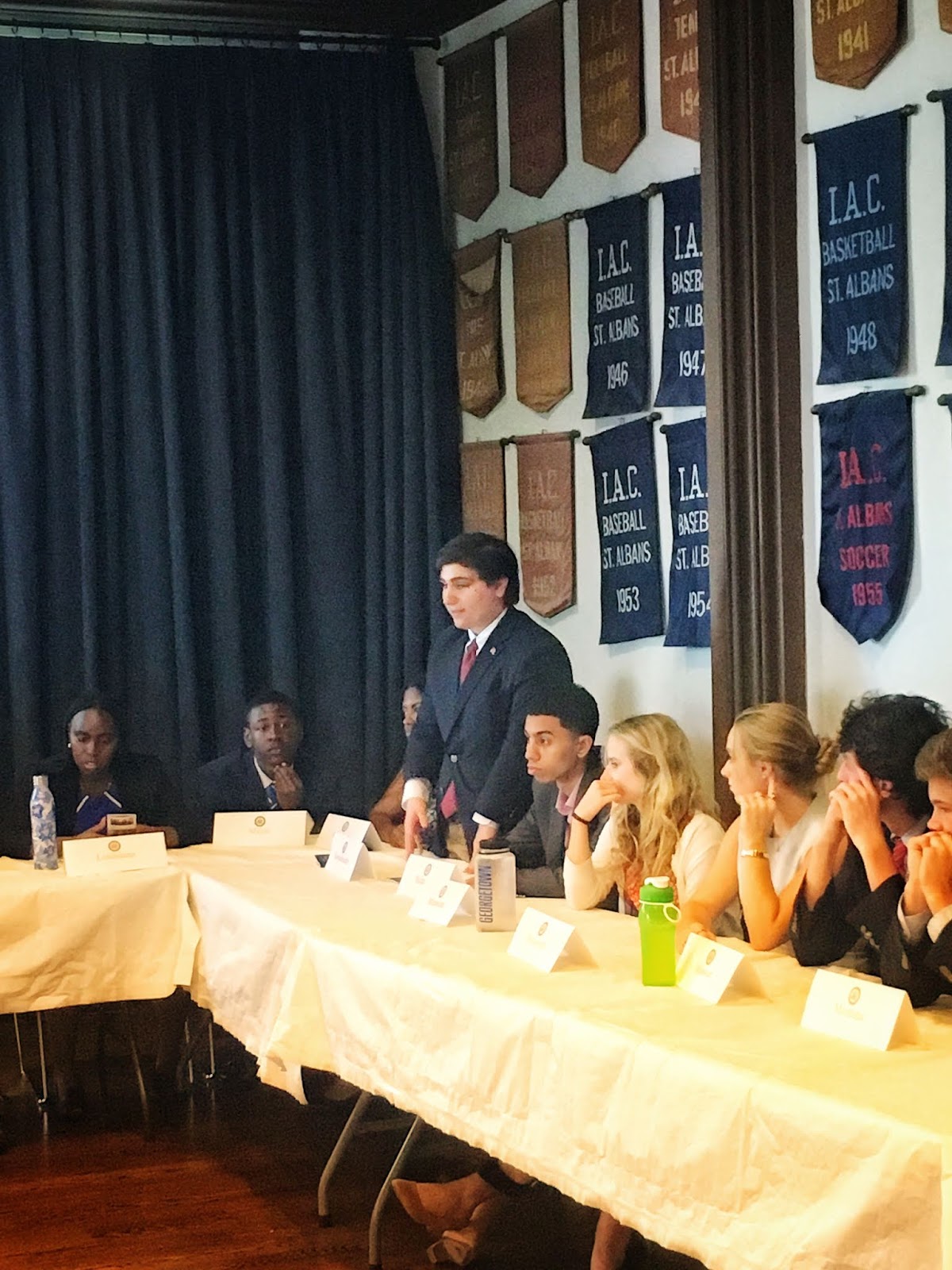
SPS 2019: Clear the Chamber for the 2019 SPS Senate Debate!
This afternoon 50 mild-mannered high school students miraculously gained about 13 years in age (check that Constitution -- you've got to be age 30 to run for the U.S. Senate) and became "U.S. Senators" debating the very legislation that they have previously drafted, lobbied for, and defended in a press conference. All this, of course, is part of the SPS annual group advocacy project, in which six groups of SPS students take on a particular domestic policy issue, such as Social Security or health care, and conceive of and lobby for legislation on their issue. Forget the "First Hundred Days" -- this group managed to do it in just 27 days! Today, came the final stage of the project in which every student represented a U.S. state and took part in a Senate-style debate. Who knows . . . it might be a dress rehearsal for the real thing! There are some talented advocates in the SPS Class of 2019.




Thursday, July 18, 2019
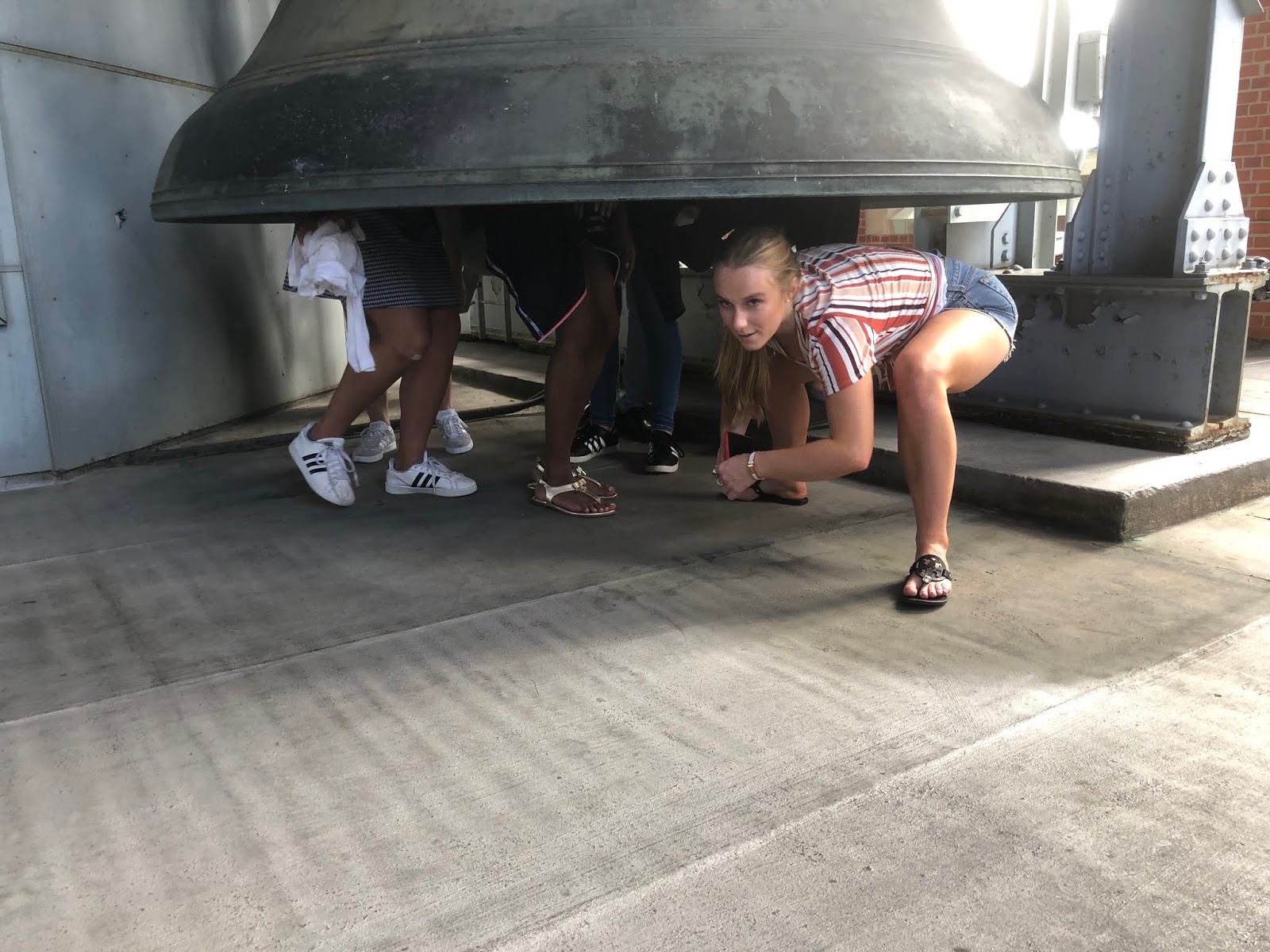
SPS 2019: Up, up and Away . . . To the Bell Tower of the Washington National Cathedral!


Tuesday, July 16, 2019
SPS 2019: Visit to NBC Studios
This evening a small group from the SPS Class of 2019 visited NBC studios, where Governor Bullock of Montana was interviewed about his quest for the Democratic nomination for president. (Who knows? Maybe one of the SPS students will return in about 40 years to be interviewed about their own political campaign!)


SPS 2019: Small Group Visit to Washington Post Candidate Forum
It turns out Washington, D.C. is quite the place to be during the summer before a presidential election. This morning, a small group from the St. Albans School of Public Service was able to visit The Washington Post to attend their live interview with Senator Bernie Sanders (one in a series of interviews of candidates for the 2020 Democratic nomination).


Monday, July 15, 2019
SPS 2019: A Visit with a U.S. Senator
They call it the most exclusive club in the world -- the United States Senate. Today, the School of Public Service class of 2019 was able to come to the Russell Senate Building to meet with Senator Sheldon Whitehouse of Rhode Island, who spoke to the group of his work on environmental issues such as climate change (including helping found a bipartisan Senate group, the Oceans Caucus) and as a member of the Judiciary Committee. We are grateful to Senator Whitehouse and his team for inviting us to Capitol Hill to learn more about the Senate and its challenges.


 |
| Put us down for a contribution to this future senatorial campaign! #Nolan2036 |
Saturday, July 13, 2019
End of an Era: The Last School of Public Service Visit to the Newseum (July 2019)
For 12 years, the Newseum (a museum celebrating newsgathering and the First Amendment) welcomed visitors to its beautiful building next to the Canadian Embassy. And for just about all 12 of those years, the School of Public Service visited every summer. Summer 2019 marks the last SPS visit, as the Newseum will close its doors at the end of the year. Thanks from SPS for the many hours of enjoyment and education about the media, the First Amendment, and the crucial role of freedom of the press in protecting democracy around the world.
 |
| On the roof of the Newseum -- one of the best views in DC! |
 |
| Margaret and Eric in front of a section of the former Berlin Wall |
 |
| Future TV stars? Wouldn't surprise us! |
Friday, July 12, 2019
SPS 2019: Outdoor Concert on the Potomac

There's no sense in staying inside on a beautiful Friday night in July, so the School of Public Service Class of 2019 hopped on the trusty bus, bound for the Yards Park on the Potomac River and a free outdoor concert. "Free," "outdoor concert," "Potomac River" -- what could be better? The SPS RAs came prepared with the perfect snack: Klondike Bar ice cream.


SPS 2019: Speaker Amelia Thompson
When it comes to the St. Albans School of Public Service, today's speaker showed that you can go home again. Amelia Thompson, SPS Class of 2004, first returned to SPS during the summer of 2007 as an RA, then served as the Assistant Director of SPS from 2008 - 2010. This time around, Ms. Thompson's return was just for the afternoon, as she spoke about her career in both the corporate and non-profit world and why she's passionate about bringing ballet to her hometown of Memphis, Tennessee, as the Director of Development for Ballet Memphis. We wish she could stay longer but are thrilled she could join us and the SPS Class of 2019 for this flying visit!


Thursday, July 11, 2019
SPS 2019: The Library of Congress
For the world's largest library, sometimes it seems like the Library of Congress can be overlooked when it comes to Washington sights -- overlooked in favor of the Monuments or the White House. But no fear! The School of Public Service is well aware of this amazing institution, and today the SPS class of 2019 was able to take a private tour of this magnificent temple of learning (including checking out two current exhibits: on Women's Suffrage and on the history of baseball).


Wednesday, July 10, 2019
SPS 2019: Twilight Among the Monuments
No matter how long you live in Washington, D.C., the sight of the Monuments on the National Mall at twilight is one to relish. Tonight, the SPS Class of 2019 was able to share this experience with each other via a twilight walking tour of the monuments (namely, the Vietnam Veterans Memorial; the Lincoln Memorial; the World War Two Memorial; and the Dr. Martin Luther King, Jr. Memorial).


Subscribe to:
Posts (Atom)